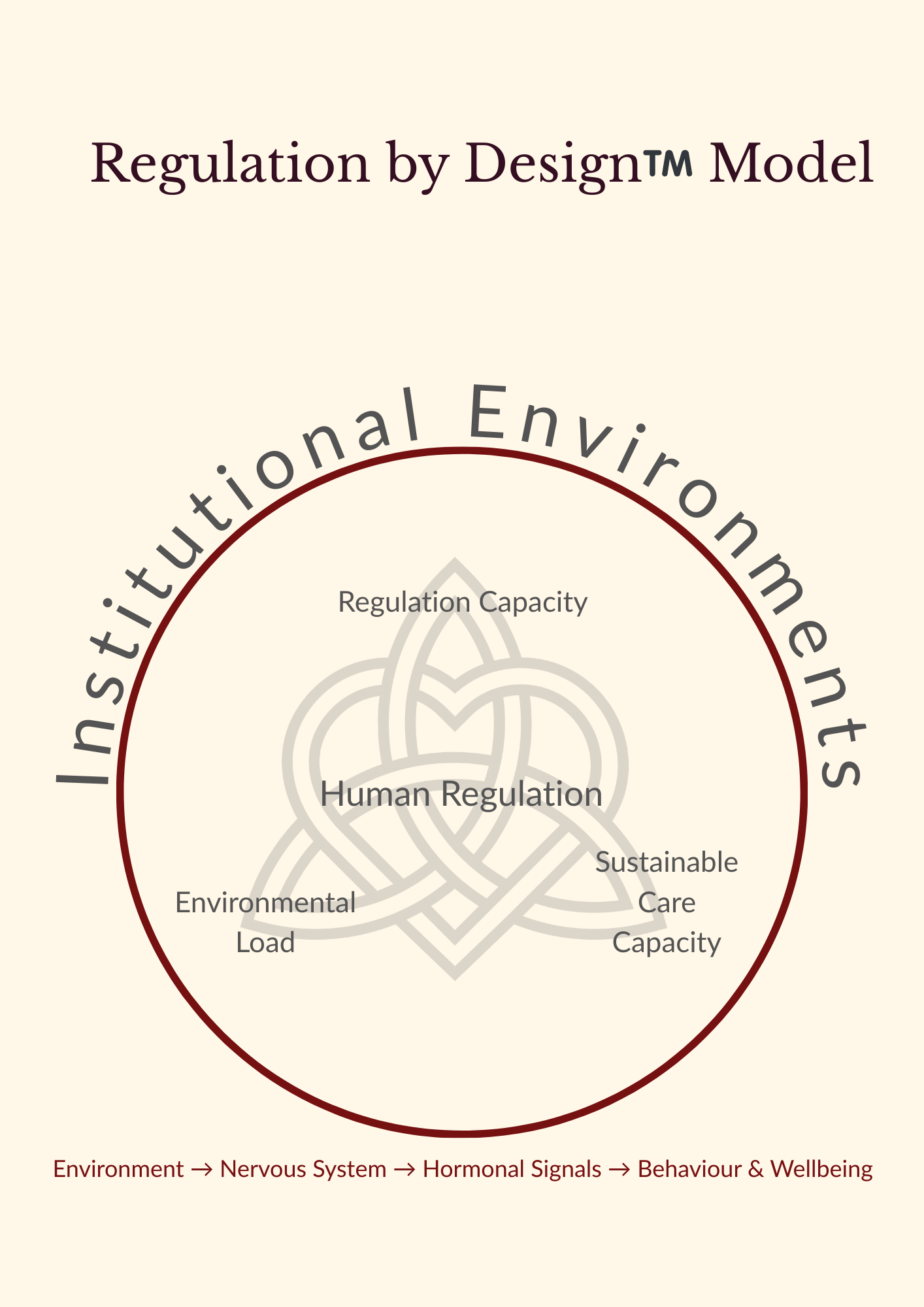
The Regulation by Design™ Framework
Regulation by design focuses on three interconnected pillars that support human regulation within environments.
Together these help institutions reduce environmental strain, strengthen regulation capacity, and sustain environments that support while being.
Environmental load
What we reduce
Environmental load refers to conditions within an environment that increase cognitive or sensory strain
Examples may include:
excessive noise
Visual clutter
Harsh lighting
Credit or chaotic spaces
competing sensory demands
Reducing environmental load can help environments feel calmer and easier to function within.
Regulation Capacity
What we strengthen
Regulation capacity refers to the ways environments can actively
support calm, attention and emotional balance.
Examples may include:
• quieter acoustic environments
• natural elements and plants
• balanced lighting
• opportunities for movement and sensory reset
• calm visual environments
These features can help people maintain focus,
wellbeing and engagement.
Sustainable Care Capacity
What we protect and scale
Sustainable care capacity refers to environments that support the
wellbeing of the people who work and learn within them.
When environments reduce strain and support regulation, organisations can better sustain:
• staff wellbeing
• attention and participation
• calmer cultures of care and learning.